I enjoyed sharing my favourite books last year and thought I would do the same for 2019. This list is not as long as last year's because not as many of the books I read the past year were truly great. But there are nearly 20 books, so enjoy reading!
1) Snow Lane by Josie Angelini
I read this book in January in only one or two sittings because it was so captivating I didn't want to stop! Seeing it now, I'd like to read it again. Annie's voice is so honest that it made me feel an instant connection with her. As the youngest of nine children and struggling with dyslexia, she is cruelly teased and neglected by her siblings and parents. So much so that a social worker who visits her home sees it as abuse. Annie comes to realise that her situation is not healthy, but she knows there is also a deep love between the members of her family. The solution will not be a simple one.
 |
| Snow Lane |
2) When You Are Old: Early Poems and Fairy Tales by W.B. Yeats
I'm grateful for this recent edition in the Penguin Drop Caps series featuring the early works of W.B. Yeats. It's not necessarily one to read straight through (although you could), but I recommend dipping into it here and there. Yeats's poems generate interesting thoughts for me. Perhaps it's more of a mood. Most are short—even most of the prose works here are fairly short—yet you are able to contemplate them for a long time. He is a master of haunting lines: 'What could have made her peaceful with a mind/ That nobleness made simple as a fire...?' One of these sonnets I still keep pinned next to my desk:
The Magi
Now as at all times I can see in the mind's eye,
In their stiff, painted clothes, the pale unsatisfied ones
Appear and disappear in the blue depth of the sky
With all their ancient faces like rain-beaten stones,
And all their helms of silver hovering side by side,
And all their eyes still fixed, hoping to find once more,
Being by Calvary's turbulence unsatisfied,
The uncontrollable mystery on the bestial floor.
 |
| 'I bring you with reverent hands/The books of my numberless dreams' |
3) The Saturdays by Elizabeth Enright
The Saturdays begins a series of Enright's books that is a sweet family chronicle about the Melendy children. Looked after by their father and their esteemed housekeeper, Cuffy, the four children are enterprising, amiable, and creative. But what is there to do in New York City in the early 1940s for 50 cents a week? So, they decide to pool their allowances and allow each sibling to go on a grand adventure alone every Saturday. After The Saturdays be sure to read The Four-Story Mistake and Then There Were Five!
'The telephone bloomed out of the wall like a kind of robot morning-glory.' -from The Four-Story Mistake
'I wonder how many girls my age could quote Shakespeare on suitable occasions the way I can, thought Mona, and instantly stubbed her toe on a rock. Probably serves me right for feeling so snooty, she told herself humbly. She had often noticed that it was just at these moments when she felt most pleased with herself that she stumbled, developed hiccups, or was told that her slip was showing.' -from Then There Were Five
'In another month—no, two maybe—would come the season of the skeletons, when all that was left of the weeds was their brittle architecture.' -from Then There Were Five
 |
| The Saturdays |
 |
| The Four-Story Mistake |
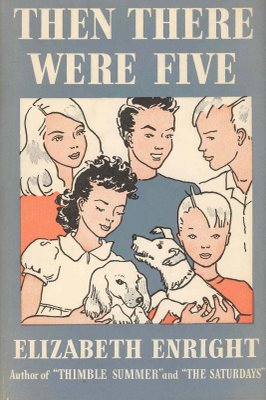 |
| Then There Were Five |
4) My Struggle by Karl Ove Knausgaard
I started Knausgaard's autobiographical series this year and admittedly have only made it part way through book three. I guess It will probably take me the rest of my life to read these and another series he wrote (Autumn, Winter, Spring, Summer)—all of which have been translated into English (My Struggle by Don Bartlett, the seasons by Ingvild Burkey). You do not need to read all of these at once! Start with the first one and the ideas contained in it are enough to make you want to revisit just this one if you never make it to the others. I love the moments when he personifies objects and describes the feelings the sight of them brings him, all part of the world inside his head:
'The dark-brown trailer stood with the bar resting on the ground, as if humbled, I thought, a servant who bowed as I appeared.' -from Book 1, Part 2
'When I think of my three children it is not only their distinctive faces that appear before me, but also the quite distinct feeling they radiate. This feeling, which is constant, is what they "are" for me. And what they "are" has been present in them ever since the first day I saw them.' -from Book 2
'Suddenly, again, I saw how old everything was. Backs, hands, feet, heads, ears, hair, nails; every single part of the bodies streaming through the concourse was old. The buzz of voices rising from them was old. Even their pleasure was old, even wishes and expectations of what the future would bring were old. Yet new, for the future was new, for us it belonged to our time, belonged to the lines of waiting taxis outside, belonged to the coffee machines on the tables in the café, belonged to the shelves of magazines in the kiosks, belonged to the mobiles and iPods, the GoreTex coats and portable laptops carried in their bags through the station and into trains, belonged to the trains and automatic doors, to the ticket machines and illuminated boards with changing destinations. Old age had no place here.' -from Book 2
I'm looking for my own copies as I chip away at it because I've had book three out from the library for almost a year. (Good thing no-one else is reading it, right?)
Book One: A Death in the Family
Book Two: A Man in Love (yeah, not so much)
Book Three: Boyhood
Book Four
Book Five: Some Rain Must Fall
Book Six
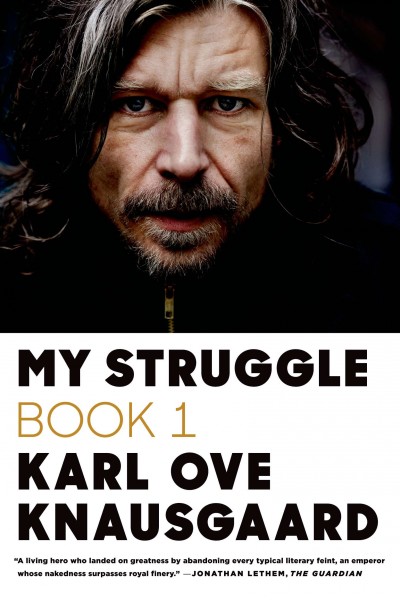 |
| Not as intimidating as it looks |
5) The Faithful Spy: Dietrich Bonhoeffer and the Plot to Kill Hitler by John Hendrix
What better way to learn more about the life of Dietrich Bonhoeffer than this elaborately illustrated biography aimed at young adults (so it's easier to understand)! I learned so much about the German Resistance movement active during World War II. The double agents are here depicted as fiercely patriotic Germans opposed to Hitler and his henchmen--which is different than the picture often painted of the German side during the war. Most importantly, this book highlights Bonhoeffer's bold preaching of God's word in defiance of Hitler's policies, which clearly demonstrates his service to others during his life. Bonhoeffer's writing can be dense and difficult to make sense of, but quotes are included throughout the text that clearly explain his ideas: 'The church is only the church when it exists for others...not dominating, but helping and serving. It must tell men of every calling what it means to live for Christ, to exist for others.'
 |
| The Faithful Spy |
6) Front Desk by Kelly Yang
In my opinion, the best writing is drawn from one's own experiences. It doesn't need to be the unadulterated truth (whether that can exist in anyone's writing is debatable), but it's evident to me that personal stories enhance fiction. Those stories allow readers to live experiences vicariously and better understand life from someone else's viewpoint. With Front Desk, readers experience the anxieties, disappointments, hardships, and triumphs of Mia Tang, a Chinese immigrant living in California. She helps her parents manage a motel. They are grievously taken advantage of by the hotel's owner, but secretly help other immigrants in spite of the danger this puts them in. Ultimately, it is because of their generosity that they end up in a better position.
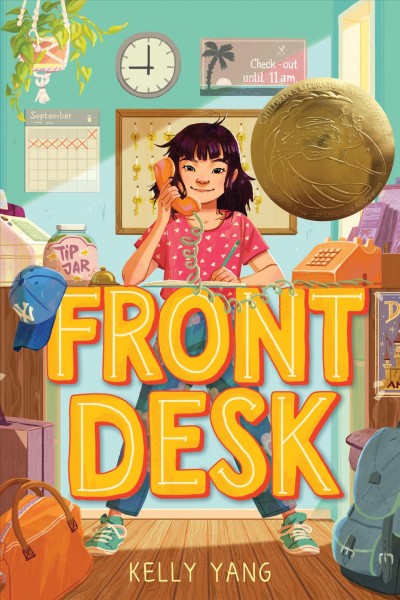 |
| Front Desk |
7) The Wonderful Flight to the Mushroom Planet by Eleanor Cameron
I had always seen this book on the shelf when I was younger, but never read it until this year because it coincided with the library's summer theme "A Universe of Stories." It takes readers back to the late 1950s when two boys, Chuck and David, construct a spaceship under the instruction of Mr. Bass, who is really an alien from the planet Basidium (mushrooms, get it?), and travel to said planet (between the earth and the moon)—which no humans have ever seen because it's only visible through a certain telescopic lens. On Basidium, the boys help solve a nutrition crisis for the aliens by introducing them to eggs. The later books in the series (Stowaway to the Mushroom Planet, Mr. Bass's Planetoid, A Mystery for Mr. Bass, Jewels from the Moon and the Meteor that Couldn't Stay, and Time and Mr. Bass) are not quite as good as this first one, I think, but I was only able to read Stowaway and Time and Mr. Bass because the others are MISSING FROM THE LIBRARY!
I worked out that since Chuck and David from Monterey, California, are about 10 in 1958, they would be about 19 for the pop festival in 1967. They probably would have told people: "I've been to the mushroom planet, man! And, you know, it was far out!"
 |
| Have you been to the mushroom planet? |
8) When You Reach Me by Rebecca Stead
Another book in the sci-fi vein is When You Reach Me, winner of the Newbery medal in 2010. This is one of those wibbly-wobbly-timey-wimey stories that you try to guess at while you're reading it. It remains a mystery to the end. Admittedly, it is a bit cliché to win the gameshow, but we'll make allowances.
 |
| When You Reach Me |
9) 101 Ways to Go Zero Waste by Kathryn Kellogg
I took many tips from this book, but more than that it got me thinking seriously about ways to reduce the waste I generate every day. It annoys me that so many items are made out of plastic or with plastic incorporated into the components in some way and are truly not recycled. The expense and process of recycling them is too large for many cities to handle and so they end up in a landfill. Plus, plastic is not even good for our bodies anyway, so why???
I had already been bringing my own grocery bags when I shopped, but now I have started to bring my own containers for more things. I try to choose bulk foods and get what I need without the packages. I stopped using shampoo and switched to bar soap; I'm trying out toothpaste tablets and lotion bars and upgrading to a stainless steel razor. Recently, I found a place to recycle torn nylon stockings. My advice is to start with simple changes and gradually add more to your routine. I love that the author emphasises the freedom to choose what is sustainable for you. You definitely do not have to throw out all your old products right away. Try to find new homes for the items you won't use up and don't buy any more of that product. I also recommend listening to the Practical(ly) Zero Waste podcast by Elsbeth Callaghan as complimentary to this book.
 |
| Try it—you'll like it. |

10) Astrid Lindgren: The Woman Behind Pippi Longstocking by Jens Andersen, translated by Caroline Waight
There were so many things I did not know about Astrid Lindgren before I read this book. It was exciting to read about her life growing up in a small village in Sweden, the early years with her first child and the strong friendship she had with his foster mother, her experiences in the publishing world and TV adaptations of her works, and her continued political activism—well into her eighties! The author (and translator) did an excellent job conveying this information in a clear, engaging way. I also really liked the black and white photos included with the text. One thing I do when reading biographies or autobiographies is spend a lot of time studying the pictures. I had to have my own copy because this is definitely a book I will be reading again and recommending to others.
 |
| Astrid Lindgren |
11) A Place to Belong by Cynthia Kadohata
Cynthia Kadohata is a Newbery Medal winning author for her book Kira-Kira, published in 2006. I have to admit that I did not read all the way through that one. I enjoyed her most recent book a lot more! It takes place in Japan just after World War II. Hanako's parents were pressured into renouncing their American citizenship in the detention camps set up for Japanese-American citizens (Nikkei) during the war. After the war is over Hanako's family is deported to Hiroshima (the site of a devastating atomic bomb) where her father's parents live as tenant farmers. As poor as the family was in the concentration camp, they always had food at least. In Japan, the whole country is so depleted by the war that almost everyone is starving. Without the black market, Hanako and her little brother would be, too. Hanako faces troubling situations. This is all conveyed by the author in a way young readers can understand, but without glossing over critical information. The only flaw with it is that it needs a stronger title. 'A Place to Belong' to me just seems like one of those flop titles of great novels that would never have made it with their original title. It's too reminiscent of cheesy romantic historical fiction fluff—which is NOT AT ALL what this book is.
 |
| Really great book, but it needs a better title. |
12) The Summer Book by Tove Jansson translated by Thomas Teal
Sophia lives on an island in Scandinavia with her father and grandmother. I especially enjoyed the chapters "The Robe" and "Of Angleworms and Others."'Sophia's father had a special bathrobe that he loved. It reached all the way to his feet and was made of very thick, stiff flannel that salt water, soil, and time had rendered even stiffer. The robe was probably German, originally, and had once been green. On its front, it still bore the remains of an intricate system of laces, along with a couple of large dark amber buttons. Thrown wide open the robe was as wide as a tent....'-opening to "The Robe"
 |
| The Summer Book |
13) Look Out for the Fitzgerald-Trouts by Esta Spalding
This book is seriously charming. The four siblings Kim, Kimo, Pippa, and Toby have such personality! The writing is admirable. I was reminded a bit of the Series of Unfortunate Events books—which I was never able to make it all the way through because they got too predictable (I know they play on formula, but it got to be too annoying for me). With this book, on the other hand, I was pleasantly surprised with every new development. Other books in the series are Knockabout with the Fitzgerald-Trouts and Shout Out for the Fitzgerald-Trouts.
 |
| Yes, they live in the car. |
14) Honey and Salt by Carl Sandburg
I'm growing to appreciate more of Carl Sandburg's poems. A lot of them are surprising to me. As in Rootabaga Stories, he often uses alliteration: 'Let your words be softer than a slow south wind blowing thistledown'; and I come across phrases that make me do a double-take: 'The one-eyed mollusc on the sea-bottom, feathered and luminous, is my equal in what he and I know of star clusters not yet found by the best of star-gazers.' This collection was first published in the 1960s.
'like a book read over and over again
like one book being a long row of books
like leaves of windflowers bending low
and bending to be never broken.' -from "Love Is a Deep and a Dark and a Lonely"
 |
| From my grandma's library |
15) The Long Dark Tea-Time of the Soul by Douglas Adams
Adams is mostly known for the Hitchhiker's Guide to the Galaxy series. He also wrote a couple books about Dirk Gently and his holistic detective agency (which also has a television series; I must say I liked the version with Stephen Mangan, but did not at all enjoy the newest version). I reread Tea-Time this year because—and this is a roundabout way of reasoning—I was looking into getting linen sheets and all I could think about was Odin (or Odwyn or whatever) and his fresh linen bedding. As you can perhaps guess from its title, the book is hilarious, wacky, sarcastic, and full of geeky references to Norse mythology.
 |
| Read at tea time |
16) Together With All Creatures: Caring for God's Living Earth
I realise not everyone will be as excited as I am about this book. It is quite dense and could have been formatted better—but it's packed with super helpful references relating to our stewardship of God's earth. The author is not specifically listed; I believe one pastor from the LCMS is behind it. The included appendix provides an abbreviated version of the main concepts in the report, but misses so many of the excellent points brought up in the report itself. I have been reading works by other Christian environmentalists like Wendell Berry within the last couple years and was pleased to see his concept of the soul discussed in chapter two.
In my opinion, the topic of environmental stewardship, as it relates to the practical operation of our churches, is brushed aside and set in a box with hippy dippy stuff and liberal jargon. People react as if there is something suspicious about environmentalism. Should there not rather be something suspicious about the use of styrofoam cups and other disposables? Just because they are convenient and have been used for the last 50 odd years, they are now canonised and not to be questioned. And another thing: where does the idea come from that our lawns have to be pristine? We can't allow beautiful variations of green plants to thrive because they are somehow an eyesore and a threat? Never mind the fact that the chemicals used to combat these harmless plants contribute to the high rate of cancer in our country. Isn't practicing monoculture conforming to the world and its values rather than being transformed by the renewal of our minds (see Romans 12:2)? Is treating creation as disposable and not caring where the food that you serve comes from working God's will? We should rather be servant-rulers of creation, following the example of Jesus when He came to earth to be our servant-king. We need to separate our wants from our needs! I don't doubt the servant hearts of my brothers and sisters in Christ and I believe that God's grace can ultimately overcome these physical problems. But whether it happens to be popular or not, we should evaluate which of our current practices are inhumane, destructive, and detrimental to our fellow creatures.
I guess I can get over the use of the term 'creatureliness' (!?). It's a small price to pay for raising awareness about this significant topic for the synod and all Christians.
 |
| I would love love LOVE to see a Bible study version of this!! |
17) Queen of the Sea by Dylan Meconis
This is an alternate history of the period in British history during the reigns of King Henry VIII and Elizabeth I. That is, the characters are based in part on those historical figures and figures surrounding them. I found it a more interesting read for the real details about history that it includes rather than whether this particular political struggle did or did not happen this way. The main character is a sister to the queens in contention for the crown. She was sent to a remote island off the British (Albion) coast when she was a baby and raised there by nuns—exiles of the crown. It also includes the most interesting explanation of the game of chess I've ever seen.
 |
| Novel in pictures |
18) The Body: A Guide for Occupants by Bill Bryson
I listened to the author read an audiobook version of this one. I know I probably didn't catch the magnitude of some of the information he presents and I would like to read it in print some time, too. Seriously, there are so many components and processes of the human body that we do not in the least understand! Research about our endocrine system is young, for example, and it was also within the last ten or so years that it was discovered there is actually a another receptor in the eye which senses light and dark (even in blind people). The only slight annoyance I had with the text is that Bryson keeps referring to macroevolution and the evolution of humans from apes to try to explain why we have certain features (not surprisingly, he often hits a dead end there). My position is that I rather marvel at the amazing human body God created for each one of us and understand that there are depths of knowledge known only to Him. He may choose to reveal this knowledge on earth through medicine and science, even there we can only guess at the completeness of His plan.
If you have read or listened to other books by Bill Bryson, then you know his style is thorough and meticulous, but also subtly humorous. He goes on many tangents and then eventually circles back to the point. When you have finished this book, you might like listening to Professor Russell Foster's Desert Island Discs episode from earlier this December (he studies circadian neuroscience).
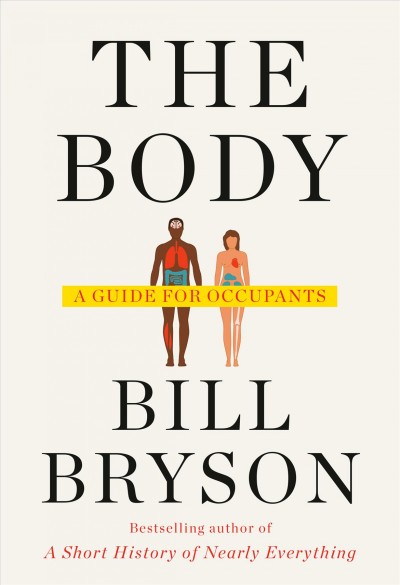 |
| The latest from Bill Bryson |