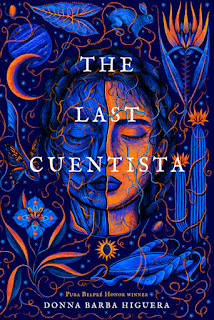
Welcome to my book list of 2022! Reflecting on my reading year, I wish I had been able to read more Swedish books (and I don't mean crime fiction), more Victorian novels, and more poetry. I'm still trying to break myself out of the habit of reading to the end of a book that I'm not really enjoying. I had some small success with that this year and I don't regret it! My reading list is already spilling into 2023 with the gigantic Babel by R.F. Kuang that came out in August. I'm hoping it will have a similar atmosphere to Jonathan Strange and Mr Norrell by Susanna Clarke. Sometimes I just read one chapter out of that book at a time, but I plan to reread the whole thing soon listening to the audio with my dad. I'd like to start John by Philip Norman in the new year, too. It's always good to start off the year with a giant tome about rock history, right? Plus, I got The Golden Mole by Katherine Rundell for Christmas! This is a collection of the fabulous essays she's written in The London Review of Books. By the way, I'll be grouping my books according to type this year, not in the order I read them.
I'll start with early chapter books I read or reread this year. We call them beginning chapter books at my library. This format is tricky because vocabulary and sentence length are limited. The age of the protagonist is usually around seven years old (first or second grade). It's torturous to read an early chapter book that is poorly planned or contains redundant wording, but oh so exciting to be able to share a good story with children who are starting out on their reading journeys. These are also great series to read aloud together. My recommendations here are all realistic fiction. I've yet to find something that competes with Frog and Toad! British Nigerian author Atinuke writes lovely books. Read them all right now! Look for Hilary McKay's series about Lulu at your library. Find in translation or read it in the original: Rose Lagercrantz and Eva Eriksson's My Happy Life/Dunne series. Another global read is the Juana and Lucas series by Juana Medina which takes place in Columbia. Erin Entrada Kelly's Surely Surely Marisol Rainy (sequel to Maybe Maybe Marisol Rainey) came out this year. Calpurnia Tate, Girl Vet by Jacqueline Kelly is a series I mentioned last year that fits in this category. And check out the Anne series by Kallie George and Abigail Halpin!
Anna Hibiscus series, Too Small Tola series, and Africa, Amazing Africa by Atinuke
Atinuke's books are always a treat to read because of her writing style. Her language is straightforward without being dull. You'd hardly notice that the sentences are planned to be shorter if you weren't looking for that. Her series about Anna Hibiscus has eight books, not including a couple picture books with the same characters, and it follows a girl who lives in Africa—the details of which are based on Atinuke's childhood home of Nigeria. Anna Hibiscus has two younger twin brothers plus a lot of cousins, which means there's always something happening at the family compound—especially after Anna Hibiscus adopts a chicken (named Snow White). Anna Hibiscus's mother is a white woman from Canada and in one of the books Anna Hibiscus gets to visit Canada in the winter and finally see some real snow! In this series and also in Atinuke's more recent Too Small Tola books, what stands out to me is the honest way she presents her characters' living situations. Extremely rich people live side by side with very poor people. Some places even within a big city have no running water. Caring for family and each member working together is important. Atinuke's non-fiction book with illustrations by Mouni Feddag is also suitable for beginning readers and oh, so informative!

First book in the Anna Hibiscus series
Too Small Tola
Such a fun book!
Lulu series by Hilary McKay
I wrote about Dick King-Smith's Sophie books in 2020. Those are excellent, but unfortunately not readily available at my library, so ever since I read them I have been looking for something similar to recommend. This year I read the six Lulu books by Hilary McKay. Lulu is a girl who loves animals and keeps a whole menagerie at her house. I love how McKay builds up small incidents to create such suspense. Will Lulu's teacher discover that she has hatched a duck egg in class? Will Gran find out there's a stray cat staying upstairs? McKay occasionally tells the story from the animal's perspective as in Lulu and the Dog from the Sea. Okay, these covers could totally be better, though. Let's work on that.
First book in the Lulu series
Mitt lyckliga liv by Rose Lagercrantz and Eva Eriksson (Dunne series)
This is a series that I read first in English in Julia Marshall's translation, which is what is available at my library. Now I'm reading them in the original Swedish (when I can get hold of the ebooks by using my incognito Swedish address on the Bokus.se website, that is!) I've previously written about See You When I See You. Gecko Press, please bring us more from Rose Lagercrantz and Eva Eriksson! I believe there are books about one of the characters from Dani's/Dunnes class, Meatball/Metteborg.
Mitt lyckliga liv
Moving on to the best chapter books I read this year (middle grade)...In the later part of this year I was part of a book club reading Newbery books to celebrate the 100th anniversary of the award in 2022. We read From the Mixed-Up Files of Mrs. Basil E. Frankweiler, Jacob Have I Loved, Holes, and Bud, Not Buddy. Not all books I would have picked out, definitely, but it was so fun to discuss them with other adult readers who also enjoy children's books! I hope we can keep the club going into next year with other Newbery winners and honours. Now onto some other middle grade titles:
Harry Potter and the Philosopher's Stone by J.K. Rowling
I'll start with what's been like candy for me. I came across Harry Potter and the Philosopher's Stone—yes, the British version complete with British spellings (!)—for only $1 at a book sale. That got me interested in rereading the whole series in order again. I've occasionally reread certain books in the series before now. I wanted to find the British versions, though, and compare the text to the American ones, so I sought out the Bloomsbury editions rather than Scholastic and got to read about helter skelters, satsumas, and revision. I can confirm that number five is my favourite one. So much juicy history there! Number seven is rather good, too, with the Tales of Beedle the Bard. I remember taking turns reading it with my cousins when it first came out. I must note, however, that I did miss the little chapter illustrations from the Scholastic editions, and the Bloomsbury covers are pretty dorky (so I won't be including them all here).
Please don't change the spellings
Red, White, and Whole by Rajani LaRocca
It's hard to justify writing a novel in verse format, but with verses like these, I think Rajani LaRocca has succeeded. Eighth grader Reha struggles with being American while also embracing her Indian culture. She feels like she is living two lives, and she also feels the pressure of being an only child. I loved the way the story of Savitri and Satyavan is interspersed in five parts here. Since I didn't know the story, I was hanging on the edge of my seat and skipping ahead to find out how it ends! Each poem in Red, White, and Whole hangs together, so I won't write out any excerpts here, you'll have to read it yourself.
The title refers to blood cells
Golden Girl by Reem Faruqi
Another novel in verse I enjoyed this year is Golden Girl by Reem Faruqi. Readers are emotionally right along with Aafiyah when what begins with her accidentally taking a chapstick turns into something bigger, and it's so easy to lie—until it's not. Until she gets caught. And that feels heavy. If you are like me, you will love turning pages frequently because of the short amount of text—but then paging back again to double-check that tiny detail...
Golden Girl
We Are Wolves by Katrina Nannestad
The story of Liesl and her siblings feels scarily relevant today considering all the countries at war and recovering from war, though it is actually historical fiction that takes place in Europe—formerly East Prussia—in 1945. I'd say you can read my review for the library, but the website is down right now! Nannestad has written a sensitive portrait about the hardships of war and how war affects children in particular. If you like the Breadwinner series by Deborah Ellis, you'll want to add this to your list as well.
Wolfskinder
Gaia: Goddess of Earth by Imogen and Isabel Greenberg
Gaia is the second book in the Tales of Great Goddesses series. Last year, I wrote about Athena: Goddess of Wisdom and War. I never understood Greek and Roman mythology, but this format makes it fun and engaging. It also emphasizes the power of particular women/goddesses and this one has an environmental message.
Never heard of Gaia before?
There are a couple of outstanding picture books I'd like to mention. I read many picture books every week in the children's room at the library. There always seems to be something new when I get to the shelves!
Marshmallow Clouds by Ted Kooser and Connie Wanek, illustrated by Richard Jones
Marshmallow Clouds includes more than 25 masterful poems by Ted Kooser and Connie Wanek. The poets aren't credited individually for each poem, so I'd be interested to know more about their collaborative process. How did they write these poems together? Did they alternate, pass the poems back and forth, or collaborate as a Lennon/McCartney songwriting team? I don't know so much about Wanek's work, but I can hear Kooser's voice come through especially on the poem "July." "Barn" is another favourite. I wish this collection had a different title like Imagine or The Four Elements, because Marshmallow Clouds gives an impression of immaturity, and what I appreciate most about this collection is that each poem sounds very mature. The poets trust children with their metaphors—some of which are quite unusual—and with poetic language. Poetry for children, especially presented in a picture book format (I mean specifically a collection of poems, not one text that is spread across the book), is too often just text that rhymes, and there's no real poetic language in it. The personifications of things like barns and shadows and fire in these poems probably makes much more sense to a ten-year-old than to some adults.
July
One summer day I was boiled and salted
like a peanut, I was the meat
in a heat sandwich, the dog in a hot.
I was the crimson crayon
melting in a sunny car,
the color of firecrackers and flags
and Mars, where once water
cooled the red stones.
Finally the sun set
and someone let the crickets out,
then opened the firefly jar.
The darkness filled with blinking stars
like whispers for my eyes.
Barn
This old barn doesn't know where it is
because it has never been anywhere else,
but what's it missed? The city, come on,
all those two-stall and three-stall garages
elbow to elbow all along the streets?
No way. It likes what it has, its peace
and quiet, the things it's collected, buckets
of bent nails one day to be straightened,
a tractor that hasn't been started for years,
the softening cardboard cartons of parts
for machinery it scarcely remembers.
Day in and day out it wakes and pulls on
its patched-up underwear of rotten boards
beneath its coveralls of corrugated metal,
and looks out over what's always the same,
and combs its roof straight down the middle.
Gas
Sometimes gas is a liquid
that can burn.
If you're careful
you never smell it on your hands.
It's a first cousin, perhaps,
of fat, that doesn't mix with water,
related also to pine pitch,
the golden blood of the tree.
I look at the big oaks
and imagine them after another
million years, filling
someone's gas tank with acorns.
But so much happens over
immense amounts of time, such as
365 horses turning into an engine,
and someday, if we're lucky,
back into horses.
Boat
An aluminum boat has been left upside down
up on blocks at the edge of the water.
It looks like a hand cupped over a shadow
to keep it from scuttling away. There's just
enough air for the shadow to breathe
and it's pulled in its head and its bleached
wooden oars and is waiting. It's been waiting
all summer, and maybe for thousands of years,
peering out at the meddlesome world.
The Village Tennis Court
The old net was a sagging obstacle
till one day it fell altogether,
and nothing stood between us.
The court was an open road now,
lines painted down the middle and on
each side, and the ball was traffic, one car
rolling to a stop with a flat tire.
We never kept score; you never had to
crush me and I never had to cheat.
Grass grew in every crooked crack,
impossible to pull. If you tugged,
it broke off in your hand like a lizard's tail.
This grass was the prairie coming
back to life, mowing down all lofty
human notions, blade by blade.

The subtitle on the UK edition is: Poems Inspired by Nature
Farmhouse by Sophie Blackall
I know that Sophie Blackall has won awards for her illustrations before, and I would be surprised if this book didn't get awards of its own. Her style reminds me of classic books like Millions of Cats by Wanda Gág and The Little House by Virginia Lee Burton. Perhaps even more so The Little House because this book is about a farmhouse and the family who lived there. The story was inspired by a real property in New York that Blackall bought to turn into a retreat space for the children's literature community. The old house was in such bad shape that it had to be torn down, but this book is Blackall's way to commemorate that structure and the large family who lived there for so many years. It makes me think of my house, too, which was also formerly the home of a dairy farming family. You can listen to Sophie Blackall speak about this book on The Yarn podcast.
Sweet!
Now on to Beatles books! When have I not included at least one on my annual book list?
The Lyrics by Paul McCartney, edited by Paul Muldoon
The gem of the year is definitely The Lyrics by Paul McCartney with help from the poet Paul Muldoon. The one bad thing about it is that it's so hefty I have trouble getting it back and forth from the library! (In case you are wondering, there was a decent waiting list when it first came out and now I'm the only person who checks it out.) After you've read through it once, of course, it's probably more of a reference book to have on the shelf than a book to read for pleasure. It is organised by song title alphabetically, so you can read just about certain songs. I found that I most enjoyed reading about the songs written between 1966 and 1970. There's just something about that time!
Multiple editions available by now
Those Were The Days 2.0 by Stefan Granados
Speaking of the time period between 1966 and 1970, I also read Those Were The Days 2.0 by Stefan Granados and watched the documentary Strange Fruit: The Beatles' Apple Records. The book was recently revised for its second edition ten years after original publication. I'd only recommend it to serious Beatles fans—and if you are more interested in personal stories than chronology you should read Miss O'Dell by Chris O'Dell instead (or in addition, why not?). Those Were the Days is a little dense, but it was so full of references to follow up on that I had a dog ear on nearly every page! The majority of once impossible-to-find recordings are now available on YouTube. That made a fun little trip back in time. Most of these Apple artists I'd never want to hear again, and it makes me wonder how I can love the Beatles' music so much but not at all the music they listen to! When I did hear something I liked, I'd be glad I agreed with them, and when I disliked anything I would just think: whatever. Overall, a very thorough summary of Apple, but I still would like more information about Apple/Python music publishing. Send me a message if you would like to hear my playlist!

Definitely get the new edition!
Nothing is Real podcast by Jason Carty and Steven Cockcroft
An intriguing podcast I just discovered is called Nothing Is Real. I found out about it on BBC Sounds, listening to another programme that the hosts produced called Give The Beatles Back to the Irish. I was captivated listening to them talk about the Beatles' history. I don't necessarily agree with all their opinions about the Beatles, but listening to the show makes me feel like I'm an insider. Plus, some of these things could come up in trivia one day! Their podcast is for more serious fans, I'd imagine less serious fans would be a bit lost or just lose interest. It definitely has a talk show vibe—but instead of a discussion on recent news, it's about really old news. There are exclusive episodes, too, but I've got to listen to all their free episodes before I decide if I really need to pay for the content. For something similarly fun that has shorter episodes, try A to Z of Psychedelia, a podcast from 6 Music hosted by Marc Riley and Rob Hughes. I first listened to the series a few years ago, and I keep coming back to the episodes because they are so interesting and really funny! There's a whole episode on Sgt. Pepper and mentions of the Beatles throughout the series.

Goes on for hours
Baby's in Black: Astrid Kirchherr, Stuart Sutcliffe, and The Beatles by Arne Bellstorf, tr. Michael Waaler
During Beatles Weekend I read Baby's in Black by Arne Bellstorf, which was originally published in Germany. It's a fast read in comic book or graphic novel format, and I like that it focuses on the early early days that other books often skim over. It highlights the tragic story of Stuart Sutcliffe's death and all that lost potential (as an artist, I mean, not a musician). Also the freaky thought that John may have contributed to Stuart's condition because of a fight they were involved in—not really likely, but it may have been something that haunted John.
Hamburg days
This is What It Sounds Like by Susan Rogers and Ogi Ogas
I guess I'll stick this one in here. It's not a Beatles book, but it's about music. I liked reading it, not so much for the text itself as for the ideas it brings up. Why do I like the music I like? Isn't it odd that something created more than 50 years ago by a twenty-something British Folkie is my vibe? How does that work? I most related to the chapter on tambour. That makes a big difference for me. And from another chapter, the "novelty-popularity curve" was interesting. There should be a time element added to it. What if you like what was popular 60 years ago?
What does this sound like to you?
From music, I'll move on to poetry and literature. My sister introduced me to the podcast Poetry Unbound, and I'm making an effort to keep up with Swedish poetry through Dagens dikt from Sveriges Radio. That is where I found out about the poet Jerker Sagfors from Trollhättan. I organised a youth poetry contest for my library this spring and in the course of promoting that, ended up translating "Ja visst gör det ont" by Karin Boye (my own version). Reading essays by Jhumpa Lahiri was big for me this year. So, thank you, Jhumpa Lahiri! More on that below.
Poetry Unbound from On Being Studios, presented by Pádraig Ó Tuama
I won't say that I don't like contemporary poetry, because when people say they don't like poetry, that's like saying 'I don't like music.' Yet it is hard to sift through poetry because there is so much of it I don't connect with or like to read. Sometimes I've been disappointed by a poem or a collection and it makes me too discouraged to look anymore. This show is great because the poems are already selected. Then I get to hear a thoughtful essay on what it means to Pádraig Ó Tuama and maybe appreciate the poem more than I otherwise would have. I do like to discover poems on this show, but mostly I just like the idea around it and all the poetry talk. The atmosphere can lead me to appreciate the poetry I do like even more and perhaps even lead to composing my own poetry. This year I most enjoyed listening to the episodes on these poems:
"On Listening to Your Teacher Take Attendance" by Aimee Nezhukmatathil
"1383" by Emily Dickinson
"Sestina" by Elizabeth Bishop
"Learning about Constellations" by Saddiq Dzukogi
"Leaving the Island" by David Whyte
Poetry talk
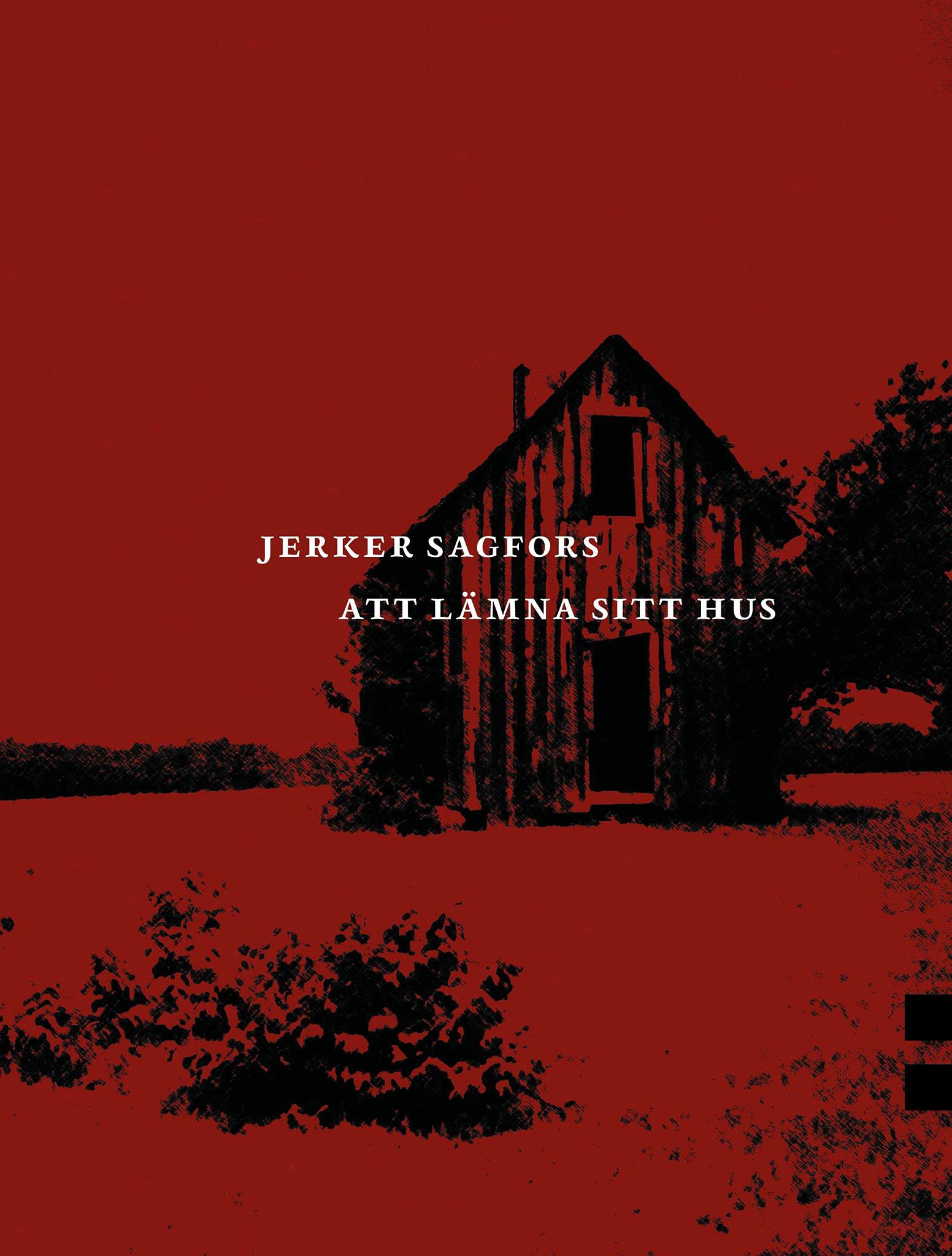
Att lämna sitt hus by Jerker Sagfors
One thing I like about reading poetry in Swedish is that I'm never absolutely sure what is going on. Did I understand that correctly? Is that really what this means? And through translating I could be reading more into the words than native speakers do. When only listening to a recording of a poem or something, it's even more perplexing because maybe I misheard the words! This often will bring up new ideas for my own poetry after taking an idea that I misheard and translated. I heard a couple poems by Jerker Sagfors on Dagens dikt which I liked, and, fortunately for me, he happens to have a book on Amazon (in the original Swedish) that I could actually have shipped to me. I'm not exactly sure how to translate the title: Att lämna sitt hus. I think it could be To Leave the House or Leaving the House. Sitt is a singular possessive pronoun, but I don't know about putting To Leave One's House or To Leave His House. It almost seems like it could be To Leave Your House. The poem from which the title comes is written in second person perspective—yet, wouldn't the title then be Att lämna ditt hus? The collection is made up of separate poems, and none have individual titles. It's about young children, living, and the environment. These are a couple of the sections I have translated—though I don't have official permission, so don't spread it around. You can listen to the author read "Barn och fåglar" here.
Det måste finnas en plats
dit inga vägar är dragna.
Ett någonstans utanför kartan.
Där träd och buskar växer av slump
för att kärnor och frön råkat hamna där,
förts dit av vinden eller med fågelspillning,
och inte planerats med avsikt
att fruktträden ska ge optimal avkastning
och buskarnas blomning bäst ska synas
från gångvägen.
There must be a place
where no paths are drawn.
Somewhere off the map.
Where trees and bushes grow by chance
because kernels and seeds happened to fall there,
brought there by the wind or with bird droppings,
and not planted with intention
that the fruit trees should give optimal yields
and the bushes' flowers should best be seen
from the path.
Barn och fåglar
vet nog mer än de avslöjar.
De delar minne
och har likadana ögon.
Svarta runda pepparkornsögon.
Visarlösa urtavlor,
där tiden varken rör sig medurs eller moturs.
När man ser in i en fågels ögon ser man ett barn.
När man ser in i ett barns ögon ser man en fågel.
Children and birds
know more than they reveal.
They share a mind
and have similar eyes.
Black, round peppercorn eyes.
Blank faces,
where time progresses neither clockwise nor counterclockwise.
When one looks into a bird's eyes one sees a child.
When one looks into a child's eyes one sees a bird.

Leaving the House
Translating Myself and Others and In Other Words by Jhumpa Lahiri
Reading Jhumpa Lahiri's essays this year was life-changing. I related to so many of her metaphors for language learning—though I can't say I've gone as far into Swedish as she has into the Italian language by any means! Yet, her work gives me confidence to write in another language and not feel inferior whatever my level may be (on a side note, I can recommend the podcast The Fluent Show for pep talks about language learning, too). Lahiri's book In Other Words was translated from the Italian by Ann Goldstein. Translating Myself and Others had a number of translators, including Lahiri.
'Because in the end to learn a language, to feel connected to it, you have to have a dialogue, however childlike, however imperfect.' –from In Other Words, "Exhile"
'Let's go back to the metaphor of the lake, the one I wanted to cross. Now I can walk into the water up to my knees, up to my waist. But I still have to keep my feet on the bottom. That's just it, I'm forced to act like someone who doesn't know how to swim.' –from In Other Words, "The Conversations"
'And yet this sweater was no longer the same, no longer the one she'd been looking for. When she saw it, she no longer felt revulsion. In fact, when she put it on, she preferred it. She didn't want to find the one she had lost, she didn't miss it. Now, when she put it on, she, too, was another.' –from In Other Words, "The Exchange"
'I already knew that writing in a new language resembled a sort of blindness...Until I read that book [Diario ultimo by Lalla Romano], I asked forgiveness from my readers and myself, for the limited nature of my Italian. Then Romano enlightened me:
"my near blindness = a point of view"
This was the response I was looking for, ever since I'd started writing in Italian, and felt the need to justify my choice...It makes me understand, and appreciate, that the inability to see clearly and fully can illuminate the world in a different way. Despite the distance, it can permit me to strike at the heart of things...Paradoxically, I believe I'm blind even in English, only in reverse. Familiarity, dexterity, and ease with a language can confer another form of blindness. One tends to feel safe, and thus more passive, perhaps even lazy. I can write in English without straining as I must in Italian, without having to examine and double-check almost every word.' –from Translating Myself and Others, "Why Italian?"
'I continue to admit that Italian is not my language, that it's an adopted language I love and use without possession. But I also ask myself: who possesses a language, and why? Is it a question of lineage? Mastery? Use? Affect? Attachment? What does it mean, in the end, to belong to a language? –from Translating Myself and Others, "Why Italian?" tr. Molly O'Brian and Jhumpa Lahiri
'As a translator I remain outside the container, in that the novel remains the brainchild of a fellow writer. It is liberating in that I don't have to fabricate anything. But I am bound to a preexisting text, and thus aware of a greater sense of responsibility. There is nothing to invent but everything to get right. There is the challenge of transplanting into a different language what already thrives, beautifully, in another.' –from Translating Myself and Others, "Containers"
Mostly about Italian, but I can apply it to Swedish!
In altre parole
The Writer magazine, edited by Nicki Porter
I've really appreciated The Writer for the past few years. The articles are always highly encouraging for amateur and beginning writers—but also, I think, not too dull for the more experienced, so that all writers will find the advice helpful. The features I most looked forward to were the column by Yi Shun Lai, "From The Front Lines," and "The Literary Spotlight" by Melissa Hart, which is about a different literary magazine each month. Sometime during this year, they've reorganised the format of the magazine a little bit and I no longer see "From The Front Lines." Too bad! but Yi Shun Lai now writes "Broadening the Bookshelves."
Check your library or digital library for The Writer!
Since July, I've been reading through books about England and Ireland to see what it would be like to live there. I'd most look forward to: teatimes, cheese, yarn shops, worshipping in a grand cathedral, scenic walks...my list could go on and on!
Fodor's Travel: Essential England, 2019
It's probably strange to put a travel guide on this list, but I really tried to soak up lots of information from this book. Over the summer I went from planning a trip to England to planning to study there in the near future. It started with someone asking me why I liked tea so much.
Travel guide
James Herriot's Yorkshire by James Herriot
I've read the books in the All Creatures Great and Small series at least a couple times, but just this year read through James Herriot's Yorkshire. Herriot writes: 'I think the exact moment it dawned on me that Yorkshire was a magical place was when I pulled my car off the unfenced road leading from Leyburn over Bellerby Moor to Grinton. It was near the highest point, by a little stream, and I looked back over the swelling moorland to the great wooded valley of the River Swale where it curves on its approach to the town of Richmond.' I think I might go there just for the cheese. All the time I read, I kept looking back at the map to see if I could find Elsinby or Ashfordly where The Royal is set! I guess those are not real places, but they may be based on Whitby. A good radio programme to go along with this book is called The Folk of the Pennines presented by Mark Radcliffe. Also after reading this, I watched the Jane Eyre movie from 2011 again just for the great scenery.
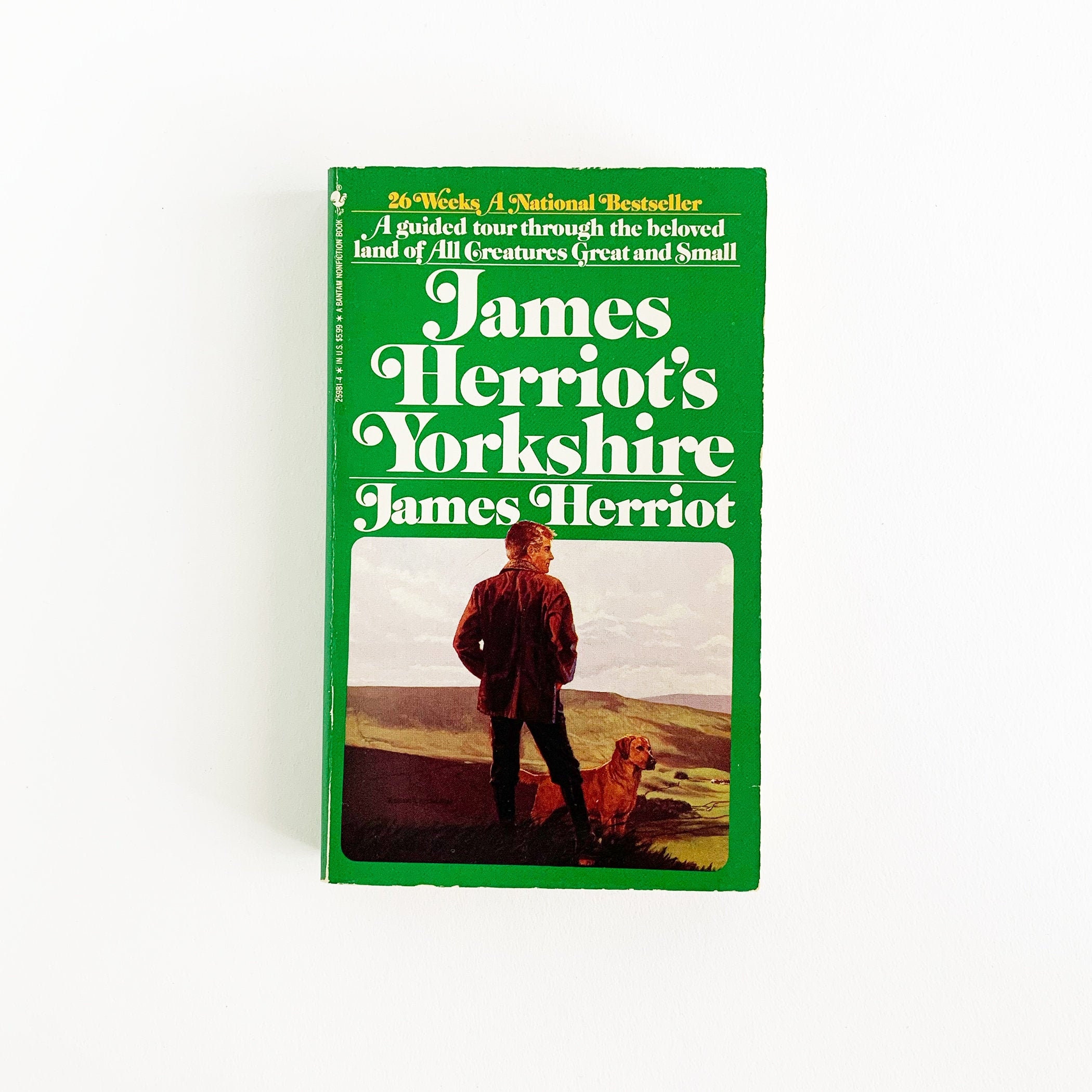
Black and white photos cannot do it justice!
The County Measure, presented by Vincent Woods
I'm glad I found this programmed on RTÉ. Ireland has 32 counties, and each episode of The County Measure is a trip through a different county. It doesn't look like they've made it around the country yet, so hopefully new episodes will keep coming. I wish there was a similar programme for England!
All around Ireland
That will be all for now. Thank you for reading or skimming this far!